-3.png)
No. 5 The Fruit of What We Believe

I watched 1 New Ager vs. 20 Christians and afterward asked a question on Threads:
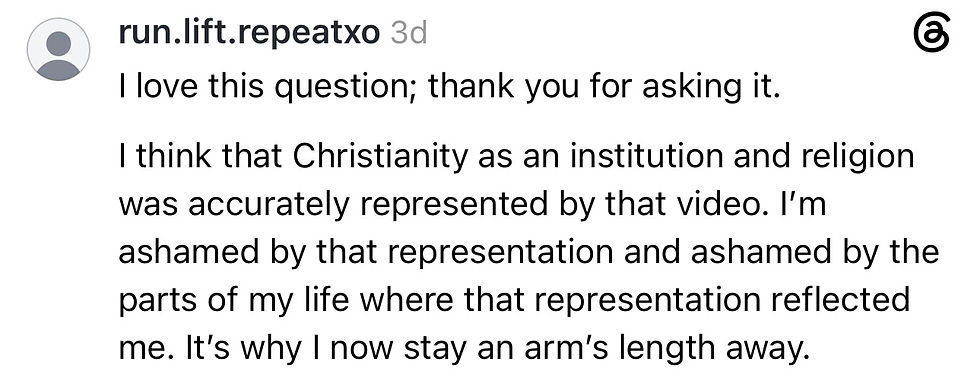
Did you feel like the Christians in the conversation accurately represented Christianity?
The answers were all over the place.
Some said yes, and not in a good way. Citing the conversation as proof of the politics in the church and why they decided to find God on their own. Most said absolutely not—not the Christianity they felt, practiced, or understood. Some felt the conversation came across as condemning or joyless. Others wished the room had included pastors, theologians, or Christians with a deeper understanding of biblical history and scripture.


What interested me wasn’t deciding who was right.
It was how contradictory people’s ideas were even though they carried the same label.
Twenty people could walk into a room carrying the same one—Christian—and still understand it differently, practice it differently, communicate it differently, and leave very different impressions on the people around them.
And Christianity isn’t only the example that got me thinking about this.
We do this with all kinds of labels.
Christian. Spiritual. Progressive. Conservative. Traditional. Healer. Farmer. Environmentalist. Good person.
A label can tell me what you call yourself.
It cannot tell me what that thing has become in you.
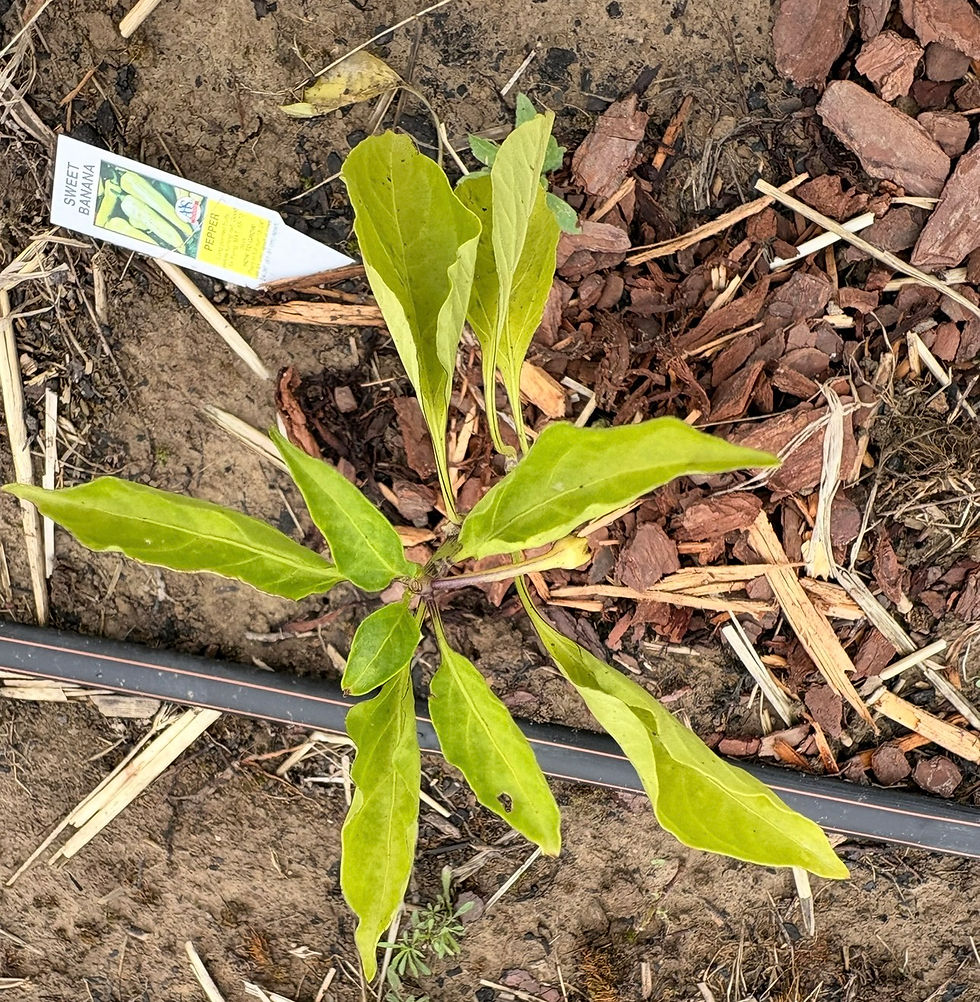
I think about this when I’m outside.
A marker in the ground can tell me what was planted there. Okra. Basil. Peppers. Whatever.
But the marker doesn’t tell me the whole story.
It doesn’t tell me what that plant has been through.
How much water it received. Whether the soil was depleted or rich. Whether it spent weeks fighting heat, disease, insects, shade, or neglect. Whether its roots had room. Whether somebody tended it carefully. How it’s going to adapt.
And eventually, you learn more by looking at what is actually growing than by reading the little plastic tag beside it.
Maybe our beliefs deserve that kind of attention too.
Not just:
What do I believe?
But:
What has what I believe become in me?
Because beliefs don’t live only in our heads. We practice them.
They eventually show up in the way we speak to people. In how quickly we judge. In whether we listen. In how we respond when someone disagrees with us. In what we make room for. In what we reject. In the way we understand ourselves and the way other people experience us.
That’s the fruit that matters.
Not whether your life looks perfect.
Not whether everyone likes you.
Not whether your beliefs keep you comfortable.
I mean the evidence of practice.
Your behavior.
Your impact.
And whether you can live with who you are becoming.

A few of the responses to my Threads post stayed with me because people weren’t only critiquing what the Christians in the video believed.
They were talking about the world those beliefs seemed to create in the room.
Did people feel understood?
Was there curiosity?
Was there space to listen?
Did the way Christianity was being practiced make someone more interested in God—or make them want to get as far away from the religion as possible?
That feels like a much bigger question than whether someone represented Christianity “correctly.”
Because every one of us is creating conditions for other people.
And maybe that’s where reflection gets uncomfortable.
A lot of what we believe was planted before we were old enough to examine it.
Family planted some things.
Tradition planted some things.
Location planted some things.
Fear did.
Love did.
Survival did.
Community did.
Religion did.
Experience did.
Sometimes stress changes the way something grows.
Sometimes what began as protection becomes hardness.
Sometimes tradition gives us roots.
Sometimes it keeps us from noticing that the conditions have changed.
And none of that automatically tells us whether the belief is good or bad.
But it does give us something worth looking at.
Where did this come from?
What shaped it?
What has it become in me?

I don’t think the goal is to interrogate every belief until we have none left.
I think it’s to look at what we are actually producing.
If I say I believe in love, does the practice of that belief make me more loving?
If I say I believe in compassion, what happens when I encounter someone whose life I don’t understand?
If I value truth, does that make me more curious—or simply more certain?
If my beliefs tell me that every person carries dignity, can people feel that dignity in the way I engage them?
And when I leave a conversation, a relationship, a community—
what conditions did the practice of my beliefs create there?
Closeness?
Connection?
Room to wonder?
Or distance and division?

Maybe labels are useful in the same way garden markers are useful.
They help us identify the plant.
But eventually, if we want to understand what is really there, we have to look at what’s growing.
And every so often, it might be worth asking ourselves:
What do I believe?
Where did it come from?
What shaped it?
What has it become in me?
And am I proud of the impact I make when I practice it?


Comments