-3.png)
What to Plant in September in Virginia (Zone 7b) + Fall Garden Guide

Every August, I’m still willing to entertain a little garden delusion.
Maybe there’s time for one more cucumber.
Maybe that squash will mature faster than the packet says.
Maybe Virginia will gift us an endless summer and everything will work itself out.
September is where I stop negotiating.
There is still plenty to plant in Central Virginia right now, but the question is no longer simply, “Will this seed grow?” The better question is whether it has enough time to establish, mature, and produce before shorter days and colder weather slow everything down.
That distinction matters because September is not the end of the garden season in Zone 7b. In many ways, this is when the fall garden starts looking like an actual garden instead of a collection of seed trays and good intentions.
The crops I started in August are moving into the ground. Root vegetables are being succession sown. Despite the current heat advisory, heat-loving summer crops are slowly giving up their space, and cooler-weather greens are finally getting their turn.
If you are wondering what you can still plant in Virginia this month, here is what is worth your time — and what I would stop trying to squeeze in.

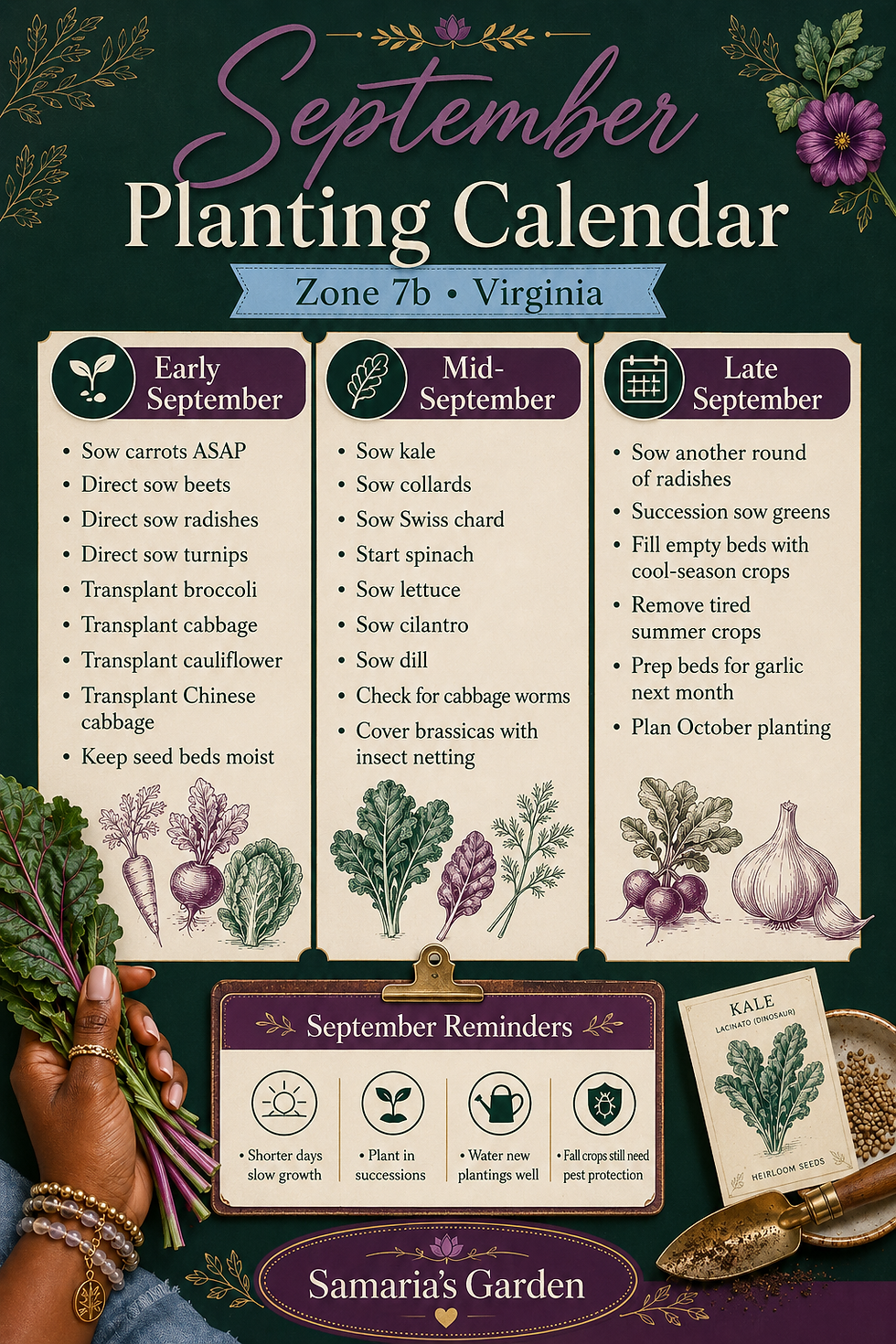
Your September Planting Snapshot
If you came here because you are standing in the garden center holding six seed packets and need a quick answer, start here.
Direct Sow Now
Beets
Carrots — plant these as soon as possible
Radishes
Turnips
Kohlrabi
Kale
Collards
Swiss chard
For Zone 7b, Virginia Cooperative Extension lists fall planting windows through about September 20 for beets and turnips, October 1 for Swiss chard, kale, and collards, and October 10 for radishes. Carrots are much tighter, with their recommended fall window ending around September 10, so I would not put those off much longer.
Transplant Now
If you started your fall crops in trays in August, many of them are ready to move outside now.
Broccoli
Cabbage
Chinese cabbage
Cauliflower
Kale
Collards
Swiss chard
Cabbage and cauliflower are especially time-sensitive in September, with Virginia Tech recommending fall transplanting through roughly September 10 in Zone 7b. Chinese cabbage has a slightly longer window, extending to around September 20.\
Plant Soon as Temperatures Cool
Spinach
Lettuce
Cilantro
Dill
Spinach is one crop where waiting a little can actually help. Virginia Tech’s Zone 7b fall planting window begins around September 10 and continues into October, which lines up nicely with the cooling soil temperatures spinach prefers.
September Is a Transition Month
The biggest shift between gardening in August and gardening in September is that you have to start thinking less about today’s weather and more about the weather your plants will be growing into.
It may still feel like summer outside, especially during the middle of the day, but the garden is already responding to shorter daylight hours. Plants generally grow more slowly as the season moves forward, even if daytime temperatures are still warm.
That means a seed packet labeled “50 days to maturity” should not be treated like an exact countdown.
Fifty days in September does not necessarily behave like fifty days in May.
This is why I like to leave myself some breathing room when I plant in fall. A crop that technically fits before frost may still struggle if it germinates slowly, gets hit with a week of cloudy weather, or spends its first few weeks fighting heat and insect pressure.
September gardening is less about squeezing everything in and more about choosing crops that naturally want to grow into cooler weather.
Root Crops Still Have Time — But Some Need to Go in Now
This is a good month for root vegetables, but their timelines are not all the same.
Radishes are the easiest choice. They grow quickly, tolerate cool weather well, and can be planted in successions into October in Zone 7b.
Beets and turnips also still have a comfortable window through much of September.
Carrots are the one I would prioritize immediately.
Their recommended fall planting window in Zone 7b runs through roughly September 10, and they can already be slow to germinate when conditions are less than perfect.
If you are planting carrots now, keep the top layer of soil consistently moist until they germinate. A very light layer of straw or another method of shading the soil surface can help prevent it from drying out too quickly.
At my own farm, this is exactly where I am right now. I have beets and radishes already going, and I am using the remaining open space for succession planting and deciding where carrots still make sense before that window closes.

Your Brassicas Should Be Moving Out of the Trays
If August was the month for starting broccoli, cabbage, kale, collards, and other fall brassicas, September is when many of those plants should be leaving the nursery tray and entering the garden.
The goal is to give them enough warm weather to establish strong roots before colder temperatures arrive.
Broccoli, cabbage, cauliflower, Chinese cabbage, kale, and collards all fit into this part of the season, although their planting windows vary. Cabbage and cauliflower need to be transplanted earlier in the month, while kale and collards offer much more flexibility and can continue being planted into October.
This is also when pest protection becomes important.
Cabbage worms and other brassica pests do not disappear just because you have mentally entered fall. If anything, your fresh young transplants can look like an all-you-can-eat buffet.
I am using insect netting over my own fall rows this season rather than waiting until I see damage. It is much easier to prevent caterpillars from getting onto the plants than it is to inspect every cabbage leaf once they have already moved in.

Greens Are About to Have Their Moment
September is when growing greens in Virginia starts becoming fun again.
Kale, collards, and Swiss chard can all be planted now, and their Zone 7b fall windows extend into October.
Spinach is just getting started.
If you tried to grow spinach through the summer and felt personally attacked by how quickly it bolted, September is your redemption arc. Its recommended Zone 7b fall window begins around September 10 and runs through October 20.
Lettuce also becomes easier as temperatures moderate, especially compared with trying to establish delicate seedlings in August heat.
For a home garden, greens are one of the places where succession planting is worth the extra effort. Instead of planting every seed you own on one Saturday afternoon, sow a smaller section every week or two.
That gives you a steadier harvest instead of thirty heads of lettuce being ready at once and suddenly becoming everybody’s salad supplier.
What I Would Not Start in September
There are always exceptions, protected growing spaces, unusually warm seasons, and varieties with very short maturity dates.
But for a normal home gardener in Central Virginia, I would stop starting most warm-season crops now.
That includes:
Tomatoes
Peppers
Cucumbers
Winter squash
Melons
Sweet potatoes
Corn
Most summer beans
Windows for crops like cucumbers, tomatoes, sweet corn, and sweet potatoes have already closed by September in Zone 7b.
Summer squash is technically listed through September 1, which I personally interpret as “you have missed your opportunity unless the seed is literally already in your hand.”
Could you plant something late and still harvest it during a warm fall?
Absolutely.
But gardening advice should be based on what is likely to work, not what might work if October decides to cosplay as July.
Do Not Forget Succession Planting
One of the easiest ways to get more out of a small fall garden is to avoid planting your entire crop at once.
Radishes are especially good for this because they mature quickly. Virginia Tech specifically recommends multiple plantings for radishes to extend the harvest season.
You can use the same basic strategy with greens, beets, turnips, and lettuce.
For example:
Week 1: Sow radishes and beets
Week 2: Sow another short section
Week 3: Sow again
By the time you begin harvesting the first planting, the next round is already growing behind it.
This is one of those garden habits that sounds overly organized until you experience the alternative: harvesting eight pounds of radishes on Tuesday and nothing else for the next month.

A Simple September Garden Checklist
If you do nothing else this month, focus on these:
Get carrots planted immediately if you still want a fall crop.
Direct sow beets, radishes, and turnips.
Transplant cabbage, broccoli, cauliflower, and Chinese cabbage early in the month.
Keep planting kale, collards, and Swiss chard.
Begin spinach once the soil cools.
Plant root crops and greens in successions instead of all at once.
Protect brassicas with insect netting or row cover.
Remove summer crops as they finish and immediately reuse the space.
Keep newly planted seed beds consistently moist.
Start thinking about garlic, which will go into the ground later in fall.
Garlic is not quite ready yet. The window is roughly October 15 and November 15 in Zone 7b, so you have time to order seed garlic and decide where it will live before next month.
What I’m Planting in My Own Virginia Garden This September
My own fall garden is already in motion.
I have collards established, beets and radishes in the ground, along with arugula, mustard greens, broccoli, cabbage, bok choy, and other fall crops moving into their permanent spaces.
I still need to make sure kale and Swiss chard are represented properly, and carrots are high on the list because their planting window is closing quickly.
There are still summer crops hanging around too, including peppers, okra, and sweet potatoes, so September at the farm does not look like a clean seasonal reset.
It looks more like one season slowly handing the garden over to the next.
That is normal.
You do not have to pull every pepper plant on September 1 just because the calendar changed. Use the space as it becomes available, keep planting the crops that still have time, and let the garden transition gradually.
September Gardening FAQ
Is September too late to start a fall garden in Virginia?
No. Several cool-season crops can still be planted throughout September in Zone 7b, including beets, radishes, turnips, kale, collards, Swiss chard, kohlrabi, and spinach.
Can I plant carrots in September in Virginia?
Yes, but plant them early. Virginia Tech’s recommended Zone 7b fall carrot planting window ends around September 10.
Can I plant spinach in September?
Yes. September is actually the beginning of the fall spinach planting window in Zone 7b, with Virginia Tech recommending approximately September 10 through October 20.
Can I still plant cabbage?
Yes, but September is the end of the recommended planting window. For Zone 7b, cabbage transplants should generally be planted by around September 10. Chinese cabbage has a little more time, extending to approximately September 20.
When should I plant garlic in Virginia?
Wait a little longer. The recommended Zone 7b planting window for garlic is approximately October 15 through November 15.
The Fall Garden Is Not the Leftover Garden
September makes it very obvious that a fall garden is not simply whatever you manage to squeeze in after summer.
It is its own growing season, with crops that genuinely prefer where the weather is headed.
There is still plenty of time to grow food in Virginia, but this is the month when being intentional pays off. Plant the crops that fit the season, give them enough time to establish, and stop wasting garden space trying to convince a watermelon that winter is not coming.
Your tomatoes had their turn.
Let the collards live.

Comments