-3.png)
Echinacea: I Knew the Tea Before the Flower

I knew echinacea before I knew what echinacea looked like.
For years, it lived in the tea section of my brain. Echinacea was something I reached for when my throat started bothering me, usually mixed into some herbal tea promising immune support. I knew the name on the box. I knew the taste. I knew I associated it with being sick.
Then I started gardening, learned what purple coneflower looked like, and realized: Wait. THAT'S echinacea?
Of course it would be purple.
Purple is my favorite color, so the plant was already halfway into the garden at that point.
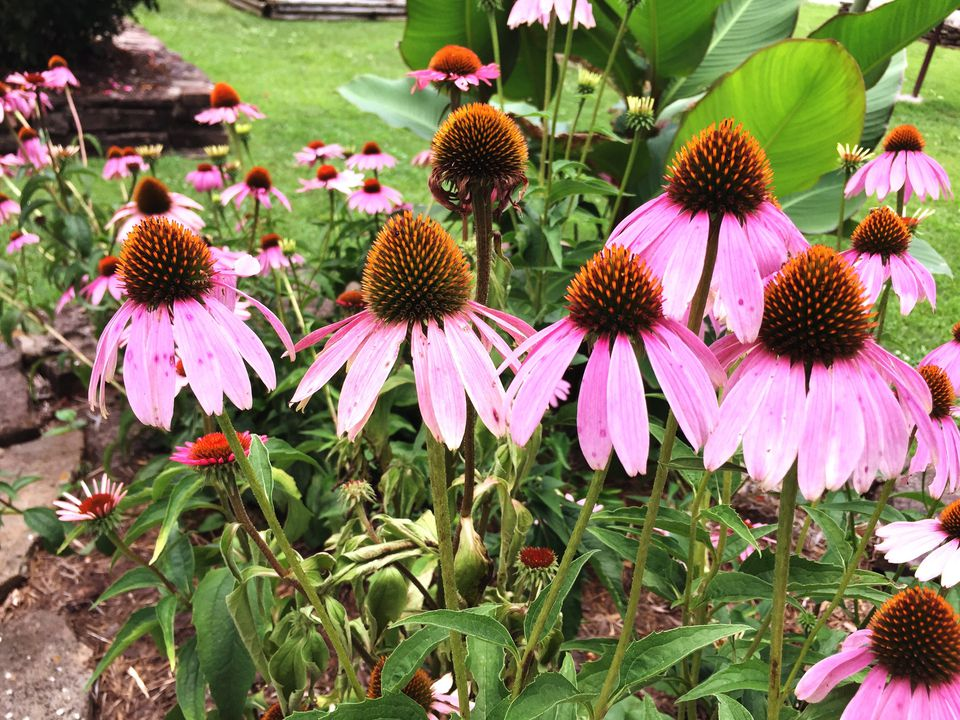
Then I started seeing it everywhere. Pollinator gardens, native-inspired landscapes, client yards, nurseries. Once you learn what echinacea looks like, it's one of those plants that suddenly seems to have been following you around your whole life.
So naturally, I decided to grow my own.
And, naturally, I chose the slow way.
I started Echinacea purpurea, or purple coneflower, from seed this spring. They're alive, they're growing, and they're currently giving me absolutely none of the purple flowers I signed up for.
We'll get to that.
Because while writing this, I also learned something else: the echinacea I see everywhere in Virginia isn't actually Virginia's native echinacea.
Apparently, I still had some introductions to make.
What It Looks Like and When
Purple coneflower is one of those plants that's easy to recognize once somebody points it out.
The flowers have pinkish-purple petals that droop slightly away from a raised, spiky orange-brown center—the "cone" in coneflower. Mature plants generally stand somewhere around two to four feet tall, with sturdy stems that hold the flowers above the foliage.
It belongs to the same Asteraceae family as daisies, sunflowers and Black-Eyed Susans, which makes sense once you look at all of them together. They're cousins wearing very different outfits.
Purple coneflower typically blooms through summer, often continuing into early fall. And the flowers don't become useless once the petals disappear. Those dark, spiky seed heads can remain standing well after bloom season, giving the garden structure and eventually becoming a food source.
While there are now echinacea cultivars in reds, oranges, yellows, whites and just about every shade a nursery can convince this plant to wear, I still love the classic purple. Maybe I'm biased.
Actually, I'm definitely biased.
Who's Living In It

The bees love echinacea.
That's one of the reasons I kept noticing it before I ever grew it myself. When you find a mature patch of purple coneflower in bloom, there's usually something working those cones.
But "pollinators love it" doesn't tell you very much, so let's get more specific.
Purple coneflower provides both nectar and pollen, attracting a mix of native bees as well as butterflies throughout its summer bloom. Bumble bees are especially easy to spot because the raised center gives them plenty of room to move from tiny flower to tiny flower collecting pollen as they go.
Butterflies use the flowers for nectar too, including swallowtails and other larger butterflies that can land on the sturdy flower heads.
And the relationship doesn't end when the petals disappear.
If you leave those spiky seed heads standing instead of cutting everything back the second the flowers fade, birds—especially goldfinches and other seed-eating songbirds—can pick at the seeds later in the season.
That's one of the things I like about plants like echinacea. The flower isn't only doing something while it's pretty.
It can spend summer feeding insects and then carry food into another season for birds.
Wait — Is It Actually Native to Virginia?
Here's where writing this series made me correct myself.
I thought purple coneflower was a Virginia native.
Honestly, I didn't question it much. I've seen it in pollinator gardens, native-inspired landscapes and client yards all over Virginia. It's sold everywhere, grows beautifully here and looks completely at home next to the Black-Eyed Susans and other summer natives I recognize.
So somewhere along the way, I mentally filed Echinacea purpurea under Virginia native. Technically, it isn't.
Purple coneflower is native to parts of the United States, primarily farther west and into the Midwest. In Virginia, the populations growing outside cultivation are considered introduced rather than naturally occurring.
Which immediately made me wonder:
Okay...then what's Virginia's echinacea?
Turns out, we have one.
Meet Echinacea laevigata, or smooth coneflower.
And this is where the story gets much more interesting.
Meet Virginia's Coneflower
Smooth coneflower doesn't look wildly different from the purple coneflower I already knew. If you put the two near each other, you'd immediately recognize them as relatives.
But smooth coneflower tends to look a little more delicate and, honestly, a little more dramatic.

Its pink-to-pale-purple petals are generally narrower and droop down from the center cone, sometimes so much that the cone looks like it's wearing a tiny skirt that's having a very bad day.
The plant itself can reach roughly three to five feet tall and blooms from late spring into summer.
But here's what surprised me most:
I've worked with native plants in Virginia gardens, shopped native nurseries and paid increasingly more attention to what's growing around me—and I don't remember seeing this one.
There's a reason.
Smooth coneflower isn't simply another native perennial waiting for us to notice it at the garden center.
It's federally endangered and considered threatened in Virginia.
Its natural populations have been reduced by habitat loss and development, but also by changes to the habitats that remain. Smooth coneflower naturally grows in open areas with plenty of light. Historically, periodic fires and other disturbances helped keep some of these habitats open by preventing shrubs and young trees from taking over. As we've gotten very good at preventing those fires, woody plants have filled in some of that open space, creating more shade and less of the habitat smooth coneflower needs.
So while purple coneflower became one of the most recognizable plants in American pollinator gardens, Virginia's own echinacea became something many of us rarely encounter at all.
And suddenly this article became about a plant I didn't know I was missing.
Growing It From Seed: Apparently We're Taking Our Time
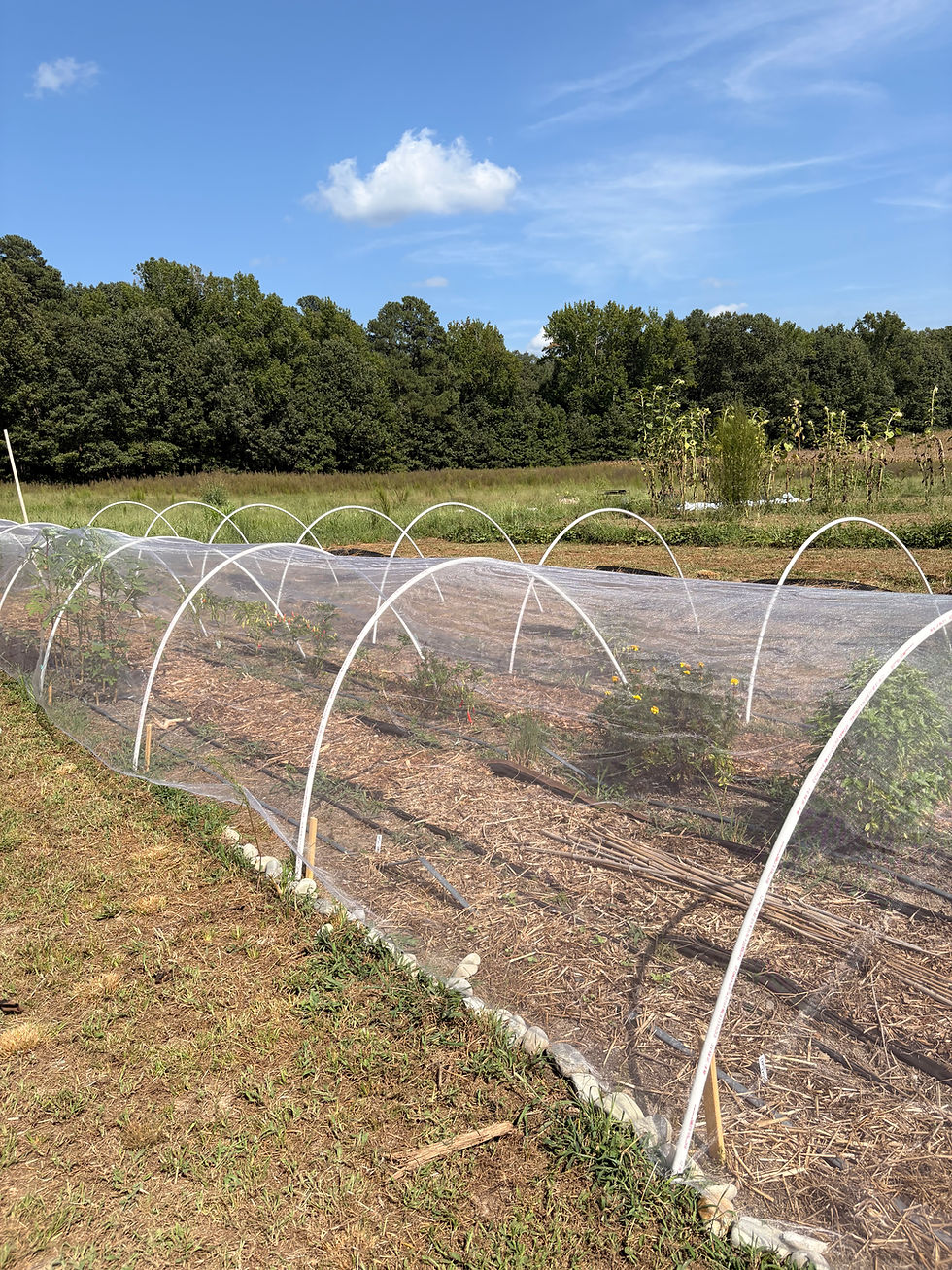
My echinacea story at the farm is currently not very glamorous.
I started my purple coneflower from seed this spring.
They germinated. They're growing.
And that's about all the excitement they're giving me this year.
Meanwhile, established echinacea plants are blooming beautifully in gardens all over Virginia, covered in bees, looking exactly like the plant I imagined when I sowed those seeds.
Mine are working on leaves.
At first, I wondered if I had done something wrong. But perennial plants aren't operating on the same timeline as most of the vegetables I'm used to growing.
A young perennial has work happening underground too.
Instead of putting all of its energy into giving me flowers immediately, it's establishing the roots and crown that can support years of growth. Purple coneflower can flower during its first year under good conditions, but when you're starting perennial plants from seed, waiting until a later growing season for the real show isn't unusual.
That's an adjustment when you're used to vegetables.
Plant a cucumber seed and the entire relationship moves quickly: germinate, vine, flower, fruit, harvest, all in one season.
Perennials operate on a different clock.
Sometimes year one is infrastructure.
Who's Eating It?
Here's another question I'm trying to ask more often when I talk about a plant.
Not just: What does this attract?
But: What actually eats it, and do I need to care?
Coneflowers aren't generally considered especially troublesome plants when it comes to pests. Smooth coneflower is described as relatively pest resistant, although Japanese beetles can occasionally feed on it and leaf spot can occur.
Japanese beetles are particularly funny to me because I've already met plenty of them at the farm.
They apparently received the same invitation as everybody else.
But some insect damage isn't automatically a problem. If I'm intentionally growing plants that participate in the food web, I can't invite insects into the garden and then become offended when one takes a bite.
What I'm looking for is the difference between use and damage.
A caterpillar eating some foliage on a host plant is doing exactly what I planted habitat for.
A pest population defoliating a young plant before it can establish is something I may need to manage.
So no, I wouldn't plant echinacea because I expect it to repel pests.
That's not really its job.
Its value is closer to the opposite: it helps make the garden worth living in.

It brings nectar and pollen into the system. It provides food for certain caterpillars. It leaves seeds for birds. And when you create enough habitat for a diverse insect community, you're building an ecosystem rather than trying to maintain a garden where only the insects you personally approve of are allowed inside.
How to Grow Purple Coneflower in Virginia
The purple coneflower I'm currently growing isn't particularly fussy once established, which probably explains part of why Virginia gardeners use it so often.
Give it plenty of sun. Full sun will generally give you the strongest flowering, although it can tolerate some partial shade.
It prefers well-drained soil and doesn't need an overly rich, babied garden bed. Once established, coneflower can handle periods of drought much better than a freshly planted seedling.
The important distinction is established.
A mature coneflower can handle some neglect. A tiny seedling trying to build a root system still needs consistent moisture while it gets settled.
If you're starting from seed like I did, give yourself patience. Your first season may be much more about roots and foliage than flowers.
Once established, you have another choice to make: deadhead or don't.
Removing spent blooms can keep the plant looking tidy and may encourage additional flowering, but leaving at least some seed heads gives birds a food source and lets the garden keep doing something after peak bloom.
I vote for a little mess. The birds don't care about our landscaping standards.
If You Want to Grow Virginia's Smooth Coneflower
Now that I know about Echinacea laevigata, this is the one I'm going to be looking for.
Smooth coneflower can reach roughly three to five feet tall. Compared with purple coneflower, its petals tend to be narrower, fewer and more dramatically drooped around the cone. It flowers in summer; Virginia DCR notes flowering from May through July, followed by seed production from July into October.
It likes full sun but can tolerate some partial shade, and it wants average to dry, well-drained soil. It has an affinity for neutral to alkaline soils rich in calcium and magnesium, which lines up with the specialized habitats where it naturally occurs in Virginia. Once established, it's tolerant of drought, heat, humidity and relatively poor soil.
Keep a new plant watered while it's establishing. After that, this isn't something that needs to be constantly fussed over.
It can spread through both seed and underground rhizomes, and deadheading can encourage more blooms—but again, leave some seed heads if part of your goal is feeding birds.
The biggest difference between growing this and grabbing purple coneflower from the nearest garden center is where you get it.
Because smooth coneflower is endangered federally and threatened in Virginia, I would only buy nursery-propagated plants or responsibly propagated seed from a reputable native-plant source.
Don't collect it from the wild.
Rare doesn't mean free plant if you find one. 😂
The Bigger Picture
I started growing echinacea because I already liked it.
I liked the tea before I knew the flower. Then I found out the flower was purple, watched bees lose their minds over it, thought it was native to Virginia, and basically decided there was no reason not to grow it.
Now my plants are sitting at the farm taking their sweet time, and writing about them made me learn that one of the things I thought I knew wasn't actually true.
Honestly, that's a pretty accurate description of gardening.
You learn a plant in layers.
First it's the tea.
Then it's the flower.
Then it's the seedling you're impatiently checking.
Then you learn who's eating from it, who's living on it and what happens when you leave it standing after the flowers fade.
Then you learn that "native" is more specific than you thought.
And sometimes you find out that the plant you've seen in every pollinator garden isn't the native one at all—and the native version has been quietly hanging on while most of us didn't even know its name.
Eventually, hopefully, my purple coneflower will become the mature patch of flowers I'm imagining, buzzing with bees while I stand nearby acting like I wasn't waiting two years for this moment.
But now I want to find responsibly propagated smooth coneflower too.
Not because my purple coneflower suddenly became a bad plant when I learned it wasn't native to Virginia. It still feeds wildlife. I still love it. And it's still purple, which gives it an unfair advantage around here.
I just know more now.
And that's really what I want Growing in VA to be about.
Not memorizing lists of plants we're supposed to buy, but learning what's actually growing around us. Where it came from. Who depends on it. What tries to eat it. What it needs from us. And what changes when we put it back into the landscape.
My echinacea is still working on roots.
Apparently, so am I.


Comments