
November in the Garden: Virginia Zone 7b | Garden Guide

What I’m harvesting, planting, clearing and building in my Virginia Zone 7b garden this month.
November is when I officially stop trying to squeeze one more full season out of the garden.
There are still things growing. My collards, kale, cabbage, lettuce and other cool-season crops are doing what I planted them to do. I’m putting in garlic and taking a chance on one last succession of lettuce. But the peppers need to come out, the sweet potatoes need to be dug, the roselle is ready to harvest, and the empty rows are starting to matter just as much as the full ones.
The average last frost date falls between October 25 and November 5. The days are shorter, growth is slower, so I’m not planting in November the same way I was planting in September.
So November at my garden is less about what else can I plant? (which is harder than it seems) and more about harvesting what needs to come out, taking care of what can stay, covering the soil, and finally building some of the things I’ve been saying I was going to build all year.
If any of that sounds like your garden right now, here’s a Virginia Zone7b Garden Guide that will show exactly where I’m putting my energy this November.

First: I’m Paying Attention to Frost
An average frost date is a planning tool, not an appointment. In fact, this year, the first frost is anticipated to be around November 15 in Richmond but I'm the friend you tell the party starts early if you want to be there on time. So I'm planning for November 5.
One garden may get frost while another a few miles away doesn’t. Low spots can collect colder air, and protected areas can sometimes hold onto warmth a little longer. I’m watching the actual forecast, but knowing that we’re inside the normal frost window tells me a few things right now.
And first, for me, time to harvest and pull summer plants. In my space, that mostly means peppers right now.
I briefly considered trying to keep my pepper plants going because peppers are technically perennial plants in climates where winter doesn’t kill them. But that does not mean I can throw a cover over them in Virginia and meet them again in April. Overwintering peppers here would mean moving selected plants into a protected environment and managing them through winter.
That can be an experiment for another year. Right now, I have enough to do.
I’m choosing to harvest my peppers and clear the plants instead of creating another winter project for myself. If you still have peppers, okra, tomatoes, eggplant or other frost-tender summer crops outside, this is the point where I’d at least start watching nighttime temperatures closely and deciding what is worth protecting for another week and what is ready to come out. Mine are still flowering and since many of my existing Tabasco peppers are still green, I’m going to give mine another week or so to get its heat. They could be harvested now, but the more red, the more hot and I really want to make some spicy vinegar with this Tabasco harvest.

What I’m Still Planting
Not much, and that is intentional.
Garlic
Garlic is one thing I actually want going into the ground now. It gets established before winter and gives me something to look forward to harvesting next year.
One Last Lettuce Succession
I’m also putting in one final succession of lettuce, but I want to be clear about what I’m doing because this is where gardening advice can get misleading.
I am not telling you that November is prime lettuce-planting season in Zone 7b.
Virginia Tech’s recommended fall planting window for baby salad lettuce in Zone 7b runs through roughly October 20. I’m pushing that window a little because I already have the garden going and I’m willing to protect what I plant.
Row cover and cold frames can stretch a fall growing season, but late planting also means dealing with shorter days and slower growth. A seedling planted now does not behave like the same seedling planted when the days were warmer and longer.
So this one is an experiment, not a recommendation disguised as a guarantee.
If it works, we eat lettuce.
If it doesn’t, I learned something before spring.

I’m Not Pulling Everything Just Because It's November
The arrival of frost does not mean the whole vegetable garden needs to be cleared.
That’s one of the reasons I wanted fall crops in the first place.
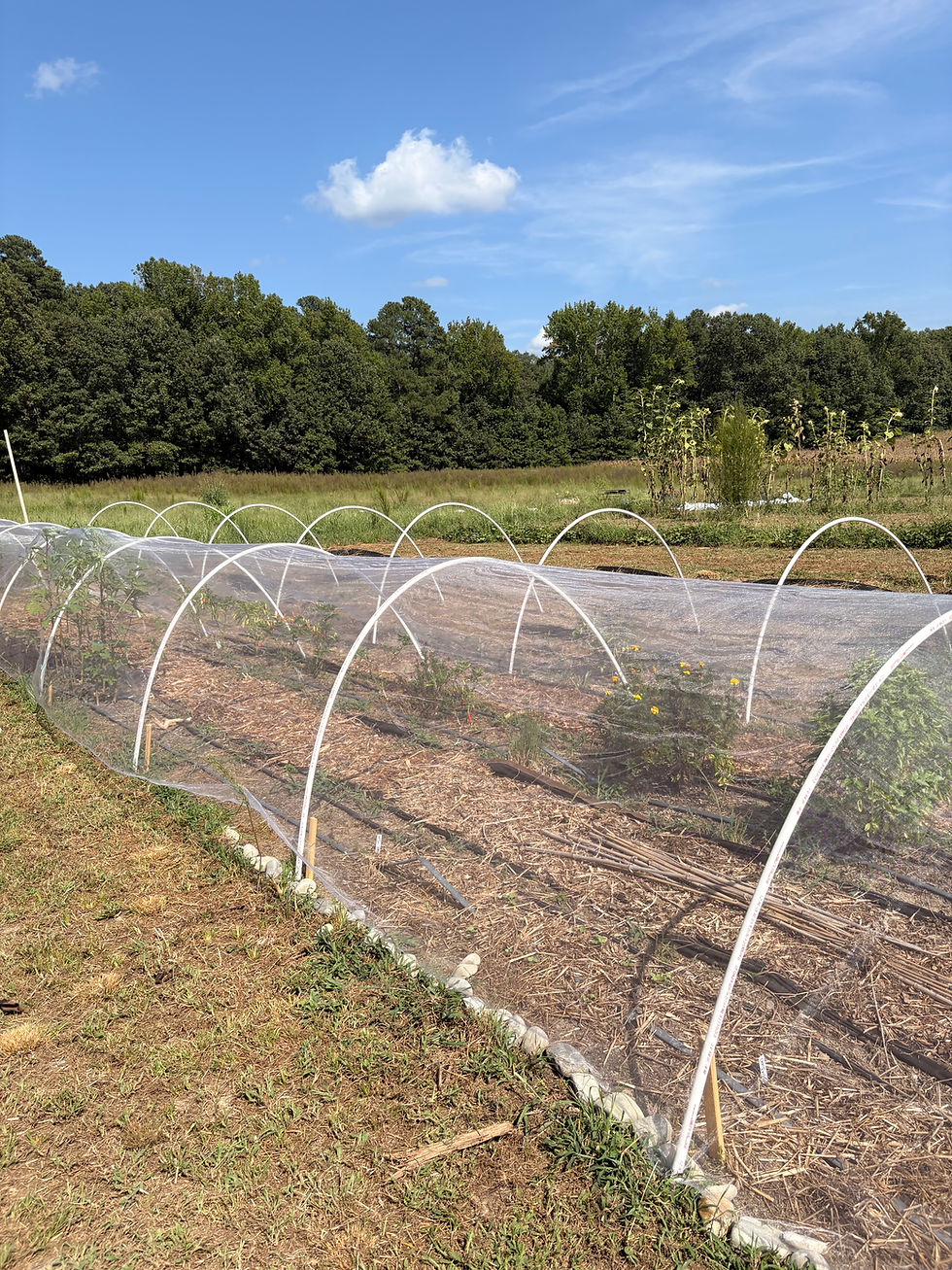
My cool-season garden is still producing, so I’m letting it. Collards, kale, cabbage, callaloo and other established hardy crops are in a very different position from my peppers. Instead of automatically pulling them, I’m watching the weather and keeping frost protection available when it makes sense.
In November, I tend to ask myself, what is still actively growing? What can handle cold? What needs protection? And, what is clearly finished?
The Pests Have Finally Calmed Down
If you read anything I wrote earlier this fall, you know the caterpillars were having entirely too good of a time in my brassicas.
Right now, though, pest pressure has finally settled down. I’m enjoying that.
But I’m also using cleanup as part of how I think about pest management going into winter.
A finished crop doesn’t automatically need to sit in the row until spring. As I clear things out, I can actually look at what happened during the season: which plants were damaged, which material is healthy enough to compost, what needs to be removed, and which beds gave me repeated problems.
Roselle Has Been One of the Best Surprises of My Fall Garden
And then there is the roselle.
Beautiful.
That’s really the word.
After so much of the summer garden starts looking tired, roselle seems to come into its moment. The calyces are beautiful, the plant itself adds something completely different to the farm, and now I finally get to harvest it.
This is one of those crops that makes me want to keep expanding what I grow beyond the standard list of vegetables. Some plants feed you. Some teach you something. Some make the whole garden prettier while doing both.
And the Sweet Potatoes Have to Come Out
My sweet potatoes have spent months doing their most important work where I can't see it.
Now I get to find out what actually happened down there.
And I'm excited because in connection to Black food history, you have to talk about sweet potatoes properly: where they came from, how they became so deeply rooted in Black Southern foodways and why we call some of them yams.
For November garden purposes, just know this:
It's time for me to dig.

Once a Row Is Empty, I Don't Want Bare Soil Sitting There All Winter
Harvesting isn't the end of the job.
Once I clear a finished row, I have to decide what happens to that soil next.
For me, that means compost and cover.
Some beds will get compost. Some will be mulched or otherwise covered. What I don't want is to spend all year talking about improving my soil and then leave it exposed through winter while rain, wind and weeds do whatever they want with it.
I'm especially conscious of this because I’m growing in Virginia soil. I don't need another season of fighting the ground every time I want to plant something.
The more I can build organic matter, protect the surface and prepare beds ahead of time, the less spring needs to begin with me trying to fix everything at once.
November Is When I Can Finally Build
This might actually be my biggest focus this month.
When everything is growing at once, infrastructure gets pushed down the list because something always needs watering, harvesting, planting, staking or saving from a bug.
Now I can see the farm itself again.
I finally cleaned the greenhouse. By March, I want it ready for seed starting instead of waiting until March to start figuring out how to make it usable.
I'm working on paths.
I'm getting Khari's Corner together.
I'm clearing rows and deciding which spaces need to stay production space and which ones need to become permanent parts of the garden.
I'm thinking about where I want living groundcovers, where I actually need a durable walking surface, and where strawberries can spread along an edge without becoming something everybody steps on.
I like creeping thyme for some of those lower-traffic sunny spaces, especially where I want the garden to feel planted rather than landscaped. I'm also being careful not to turn every open patch into another thing that needs maintenance. A groundcover should solve a problem. If I need a path that gets walked constantly or has a wheelbarrow running over it, I need to build a path. If I need to hold soil, soften an edge, feed pollinators or fill a lightly traveled space, then a living groundcover makes sense.
What I'm Actually Doing in the Garden This November

If you are in Virginia Zone 7b and your garden looks anything like mine, this is the short version:
Harvesting
Peppers and other frost-tender summer crops
Roselle
Herbs or anything else I don't want to lose to a hard freeze
Still growing
Collards
Kale
Cabbage
Lettuce and other established cool-season greens
Whatever else is healthy, established and suited to cooler weather
Planting
Garlic
One last protected lettuce succession — knowing I'm pushing the normal window
Preparing
Clearing finished vegetable rows
Adding compost
Covering bare soil
Watching forecasts and keeping frost protection accessible
Getting beds ready before spring
Building
Preparing the greenhouse for spring seed starting
Making permanent paths
Establishing appropriate groundcovers
Working on Khari's Corner (my son's sensory area)
Fixing the things I spent the growing season saying, “I need to do that.”
November Isn't the End of My Garden
A garden isn't only the vegetables coming out of it. It's the soil they're growing in, where the water goes, how I move through the space, what happens to a bed after harvest, where pollinators can live, whether the greenhouse is actually functional when I need it, and whether I've built a place my son wants to spend time in with me.
November gives me room to work on those things.
So I'm not trying to force another full round of fall crops into the ground just because there's technically space.
I'm harvesting what needs to come out. I'm tending what still has something to give. I'm planting the few things that make sense now. I'm feeding and covering the soil.
And then I'm building.

Comments